Online Courses and Student Concept. Woma: A Visual Anchor for Modern Learning
In the rapidly evolving landscape of digital education, visual communication often speaks louder than text alone. When educators, instructional designers, and marketing teams seek to convey the essence of remote learning, they frequently turn to imagery that bridges the gap between traditional academia and modern technology. This is where Online Courses and Student Concept. Woma steps in as a powerful visual asset. It is not merely an illustration; it is a narrative device that captures the dedication, focus, and accessibility inherent in today's e-learning ecosystem.
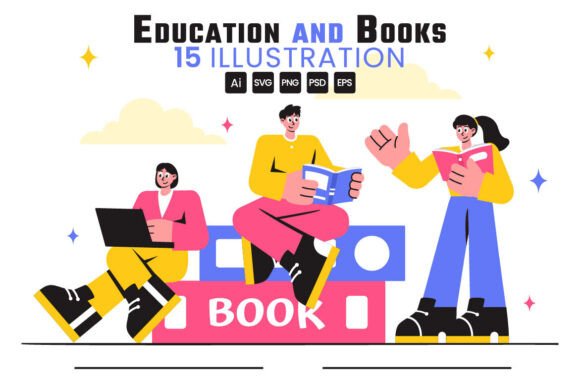
This flat vector illustration depicts a student perched atop a stack of books, deeply engrossed in her studies with the aid of a laptop. The image serves as a metaphorical bridge: the stack of books represents the foundational knowledge and academic rigor of the past, while the laptop symbolizes the dynamic, accessible tools of the present. For anyone involved in the creation or promotion of educational content, understanding how to leverage this specific visual concept can transform a generic presentation into a compelling story about growth and adaptation.
Bridging Tradition and Technology in Educational Branding
The primary strength of Online Courses and Student Concept. Woma lies in its ability to instantly communicate a complex idea through simplicity. In the crowded marketplace of online education, brands struggle to differentiate themselves. A visual that shows a learner actively engaging with technology, grounded in traditional study habits, resonates deeply with adult learners aged 20 to 50 who are balancing careers, family, and self-improvement.
Consider a scenario where a corporate training department is launching a new upskilling initiative. They need to reassure employees that the program is rigorous yet flexible. Using this illustration on landing pages or internal newsletters immediately signals that the course requires effort—the "stack of books"—but offers the convenience of digital access. It validates the learner's journey, acknowledging that while the medium has changed, the pursuit of mastery remains constant.
Similarly, for independent instructors selling courses on platforms like Udemy or Teachable, this graphic can serve as a hero image for course descriptions. It moves beyond the sterile look of stock photos featuring people pointing at whiteboards. Instead, it offers a relatable scene of solitary focus, which is often the reality of distance learning. It tells the potential student, "We understand your environment, and we are here to support your dedicated efforts."
Practical Applications Across Industries
The versatility of this concept extends far beyond standard academic settings. Its utility spans various industries where continuous learning is a core value proposition.
- Creative Agencies: Design firms often use this type of imagery in case studies to illustrate client success stories. If a company helped a client build an LMS (Learning Management System), this graphic can visually represent the end-user experience without needing custom photography.
- EdTech Startups: For pitch decks, investors want to see product-market fit. An illustration showing a student comfortably integrating technology into their study routine demonstrates that the startup understands user behavior. It suggests a product that fits seamlessly into a busy life.
- Non-Profit Organizations: NGOs focused on literacy or vocational training can use this asset to highlight their digital outreach programs. The image of a student rising above the books can symbolize social mobility and the empowerment that comes from accessible education.
- Corporate HR Portals: Internal knowledge bases benefit from approachable visuals. When employees navigate to a section on professional development, seeing a friendly, flat vector character reduces the intimidation factor of mandatory training and frames it as a positive, personal journey.
Navigating the Nuances of Visual Selection
While Online Courses and Student Concept. Woma offers significant advantages, choosing the right visual asset requires careful consideration of context and audience perception. Not every educational scenario fits the mold of a solitary student with a laptop. Understanding when to deploy this specific imagery is crucial for maintaining authenticity.
One key consideration is the target demographic. The illustration features a young woman, which aligns well with many current enrollment statistics in higher education and creative fields. However, if a course is specifically targeting senior executives or male-dominated technical trades, the creator might need to ensure the broader branding supports inclusivity, even if this specific graphic is used for general messaging. The goal is to avoid alienating segments of the audience who do not see themselves represented.
Another practical aspect is the tone of the message. The "flat vector" style is clean, modern, and optimistic. It works exceptionally well for B2B communications, website headers, and social media graphics where clarity is paramount. However, it may feel too stylized for contexts requiring raw emotional connection or serious gravity. For instance, a course dealing with crisis management or mental health support might require more realistic or softer imagery to convey empathy effectively. In those cases, the stylized nature of the Woma concept might feel slightly detached.
Strengths and Limitations in Real-World Deployment
The strengths of this design are rooted in its scalability and adaptability. As a vector file, it can be resized for everything from a mobile app icon to a large conference banner without losing quality. Its color palette can often be adjusted to match brand guidelines, making it a cost-effective solution for companies looking to maintain visual consistency across multiple channels. Furthermore, the symbolism of the books and laptop provides a built-in narrative that reduces the cognitive load on the viewer; they understand the message immediately without reading a caption.
However, there are limitations to keep in mind. Because flat vector art is highly stylized, it lacks the texture and depth of photography. If a project aims to showcase real-world application—such as a hands-on coding boot camp where physical hardware is central—a photo might convey the tactile experience better. Additionally, overuse of similar "student with laptop" tropes can lead to visual fatigue. To mitigate this, designers should pair Online Courses and Student Concept. Woma with unique typography, dynamic layouts, or complementary data visualizations to create a fresh perspective.
Ultimately, the decision to use this concept should hinge on the story you want to tell. If the narrative is about the seamless integration of learning into daily life, the efficiency of digital tools, and the enduring value of knowledge, then this illustration is an ideal companion. It transforms abstract concepts of "distance learning" into a tangible, human experience. By anchoring your content with such a thoughtful representation, you invite your audience to see themselves in the frame, ready to climb their own stack of books and open their laptops to a world of possibility.