Vector Fountain Logo Design: A Strategic Approach to Brand Identity
In the crowded landscape of modern business and creative enterprise, a logo serves as the primary anchor for brand recognition. Among the myriad of design concepts available, Vector Fountain Logo Design stands out as a versatile and timeless solution. This specific aesthetic combines the fluidity of water with the precision of vector graphics, creating an emblem that is both dynamic and structurally sound. For professionals ranging from educators and publishers to tech startups and lifestyle brands, understanding how to integrate this design element into a broader workflow is essential for building a cohesive visual identity.
The appeal of a fountain in logo design lies in its rich symbolism. It represents flow, knowledge, cleansing, and the source of life. When rendered as a vector, these organic qualities are captured within a scalable format that ensures clarity at any size, from a mobile app icon to a massive billboard. This article explores the practical application of Vector Fountain Logo Design, focusing on how it fits into planning, execution, and long-term brand strategy without relying on vague artistic theories.
Understanding the Core Elements of the Design
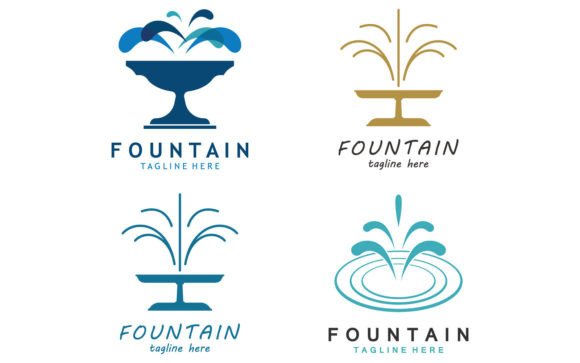
Before integrating a fountain motif into a project, one must understand the technical and conceptual components that define it. A high-quality Vector Fountain Logo Design is not merely a photograph of a water feature; it is a stylized abstraction. It relies on clean lines, geometric shapes, and often a silhouette approach to convey the essence of a splash or a spray without unnecessary detail.
The use of vector technology is critical here. Unlike raster images which degrade when enlarged, vectors are mathematical descriptions of shapes. This means the outline of the water drop, the curve of the basin, and the trajectory of the spray remain crisp regardless of resolution. In a business context, this scalability is non-negotiable. Whether the asset is used for a school crest, a corporate emblem, or a digital icon, the file must maintain integrity across all platforms.
Visually, these designs often lean towards a modern or flat style, utilizing a limited color palette. While aqua and blue are natural choices to represent water, many brands opt for a stark black and white contrast to ensure versatility. A monochromatic silhouette can be easily colored later to match seasonal campaigns or specific sub-brands, making it a highly efficient asset for marketing teams.
Strategic Integration into Business Workflows
The decision to adopt a Vector Fountain Logo Design should occur early in the branding process, ideally during the conceptualization phase. It is not an afterthought but a foundational element that dictates the direction of other visual assets. When a team selects this motif, they are signaling specific values: creativity, growth, and clarity.
Pre-Project Planning
Before commissioning or designing the logo, stakeholders must align on the narrative. Is the fountain representing a source of knowledge for an educational institution? Does it symbolize the flow of capital for a financial firm? Or does it suggest purity and nature for a wellness brand? Defining this narrative ensures that the final graphic resonates with the target audience. During this stage, mood boards should include references to vintage fountains for a classic feel or abstract splashes for a contemporary look.
During Execution and Asset Creation
Once the concept is approved, the design moves into the production phase. Here, the interaction between the designer and the client is vital. The designer will create various iterations, perhaps starting with a rough sketch or line art before refining it into a polished vector. This is where the balance between drawing and digital precision comes into play. The goal is to capture the organic movement of liquid while maintaining the sharpness required for professional print and web use.
At this stage, compatibility checks are necessary. The logo must be tested against different backgrounds—isolated on white, dark mode interfaces, and photographic textures. A well-executed Vector Fountain Logo Design should function effectively even when reduced to a single-color stroke or a solid shape.
Post-Launch and Long-Term Use
After the logo is deployed, the workflow shifts to maintenance and expansion. Because the design is vector-based, it becomes a template for creating derivative assets. Marketing teams can extract elements from the main logo—such as a single water drop or a specific wave line—to create patterns, social media headers, or packaging decoration. This modularity saves time and ensures visual consistency across all touchpoints.
Workflow Efficiency and Quality Control
Efficiency in branding is about reducing friction in the creative process. Using a standardized Vector Fountain Logo Design streamlines communication between departments. When the IT team needs a favicon, the print shop needs a dieline, and the social media manager needs a profile picture, they all pull from the same master vector file. This eliminates the need for constant redrawing or resizing, which often leads to quality degradation.
Quality control involves regular audits of how the logo is being used. Are team members stretching the image? Are they using low-resolution JPEGs instead of the original SVG or AI files? Establishing clear guidelines ensures that the symbol remains distinct and recognizable. For example, specifying minimum sizes and safe zones around the splash element prevents the logo from becoming cluttered or illegible in tight spaces.
Adapting the Concept for Different Industries
The flexibility of the fountain motif allows it to adapt to diverse sectors, provided the execution matches the industry's tone.
- Education and Academia: In this sector, the fountain often references the "fountain of knowledge." A classic or calligraphy inspired vector works well here, evoking tradition and intellectual depth. The design might incorporate a book or a pen alongside the water element to reinforce the academic mission.
- Tech and Innovation: For startups, a minimalist interpretation is preferred. Think flat design, geometric drops, and clean lines. The focus is on speed and efficiency, mirroring the rapid flow of data. A blue gradient or a simple black outline can convey sophistication without distraction.
- Nature and Sustainability: Brands focused on the environment may choose a more organic, hand-drawn style. The liquid forms might appear less rigid, mimicking natural water sources. Earth tones combined with aqua hues can highlight the connection to nature.
- Luxury and Lifestyle: High-end brands often utilize a vintage aesthetic. An intricate emblem featuring a detailed fountain silhouette, perhaps with gold foil effects in print, conveys exclusivity and heritage.
Practical Implementation Tips for Creators
For freelancers and in-house designers tasked with creating or managing these assets, several practical tips can enhance the outcome.
Focus on Negative Space: One of the most powerful techniques in logo design is the use of negative space. In a fountain design, the space between the streams of water can form hidden shapes or letters. This adds a layer of sophistication and encourages viewers to engage with the logo longer.
Master the Pen Tool: To achieve a truly professional Vector Fountain Logo Design, proficiency with vector software tools like the Pen tool is essential. Smooth curves are crucial for depicting water. Jagged or uneven lines can make the water look unnatural or messy. Practice drawing perfect arcs and splashes to ensure the illustration feels fluid.
Test for Monochrome: Before finalizing colors, strip the logo down to black and white. If the design loses its impact without color, the underlying structure is weak. A strong concept should stand on its own shape and form, regardless of the palette applied.
Organize Layers Systematically: When working on the vector file, organize layers logically. Separate the base, the water streams, the droplets, and any text elements. This organization makes future edits significantly faster. If a client wants to change the angle of the spray or remove a drop, a clean file structure allows for immediate adjustments without breaking the entire design.
Conclusion: Building a Lasting Visual Legacy
A Vector Fountain Logo Design is more than just a pretty picture; it is a strategic asset that supports business goals through clarity, scalability, and symbolic resonance. By approaching the design with a structured workflow—planning the narrative, executing with technical precision, and maintaining rigorous quality control—organizations can ensure their brand identity remains robust and adaptable.
Whether you are launching a new product, rebranding an established company, or developing educational materials, the principles of vector design offer a reliable path forward. The combination of the fountain's universal appeal and the technical advantages of vector graphics creates a powerful tool for communication. As businesses continue to navigate an increasingly digital world, having a logo that is both aesthetically pleasing and functionally superior is not just an advantage—it is a necessity. By integrating these design practices into your routine, you lay the groundwork for a visual legacy that endures.