Cute Animal Coloring Pages for Kids: A Strategic Tool for Early Development
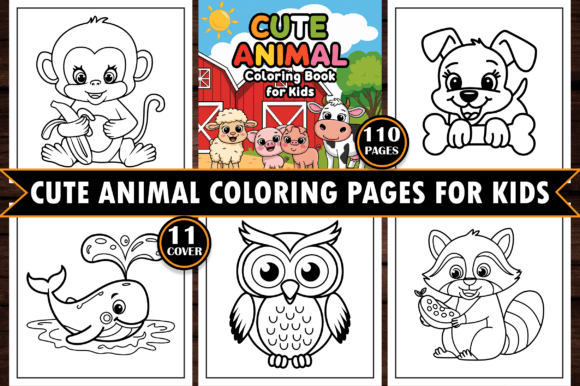
In the landscape of early childhood education and family engagement, Cute Animal Coloring Pages for Kids represent far more than a simple pastime. For educators, parents, and content creators, these resources are strategic assets designed to bridge the gap between passive entertainment and active learning. When utilized with intention, a collection featuring animals like the Bear, Monkey, and Elephant becomes a structured environment for cognitive growth, fine motor skill development, and literacy acquisition. The value lies not in the act of coloring itself, but in the curated context provided by the accompanying educational elements.
The modern approach to child development requires tools that offer dual utility: immediate engagement and long-term educational outcomes. A well-designed Cute Animals Coloring Book for Kids achieves this by integrating illustrations with factual information and writing exercises. This combination transforms a leisure activity into a micro-curriculum, allowing children to explore biodiversity while mastering foundational skills. For decision-makers in publishing or education, understanding the mechanics of this integration is essential for creating products that deliver measurable results rather than just filling time.
The Educational Architecture of Animal Illustrations
The strategic power of Cute Animal Coloring Pages for Kids stems from their ability to contextualize abstract concepts within concrete imagery. When a child encounters an illustration of a Koala or a Giraffe, they are presented with a visual anchor. The inclusion of the animal's name alongside the image facilitates word recognition and spelling practice. This is particularly effective for preschoolers and early elementary students who are transitioning from oral language to written literacy.
Consider the specific design choice of including fascinating facts about each creature. When a child colors a Polar Bear and reads that it lives in the Arctic, the activity shifts from artistic expression to information retention. This method leverages the "dual coding" theory, where visual and verbal information are processed simultaneously, leading to stronger memory encoding. For educators planning curriculum supplements, this format offers a low-friction way to introduce biology and geography concepts without the rigidity of a textbook.
Furthermore, the variety of species included—from the Alpaca and Armadillo to the Zebra and Wolverine—ensures broad exposure to global fauna. This diversity supports a curriculum focused on environmental awareness and cultural appreciation. By selecting resources that cover a wide spectrum of animals, such as the Chameleon, Lion, and Turtle, stakeholders can ensure that the learning experience is comprehensive and inclusive of different ecosystems.
Motivating Fine Motor Skills Through Engagement
Beyond literacy, the physical act of coloring within the lines of complex animal illustrations serves a critical developmental function. Controlling a crayon or marker to fill the distinct patterns of a Leopard's spots or the fur texture of a Hedgehog requires significant hand-eye coordination and muscle control. These are the same motor skills required for handwriting.
Strategic use of these pages allows parents and teachers to observe a child's progress in dexterity. If a child struggles to stay within the boundaries of a Frog or Raccoon illustration, it may indicate a need for additional motor skill exercises. Conversely, success in these tasks builds confidence and prepares the child for more demanding academic writing tasks later on. The "easy process" mentioned in many product descriptions is a deliberate design feature intended to reduce frustration and maintain engagement, ensuring the child practices the skill repeatedly without becoming discouraged.
Positioning for Parents and Educators
For adults aged 20–50, whether they are entrepreneurs launching a print-on-demand business or educators seeking classroom resources, the positioning of Cute Animal Coloring Pages for Kids must be precise. The market is saturated with generic coloring books; the competitive advantage lies in the educational depth and the quality of the illustrations.
When marketing or selecting these resources, focus on the outcome: "Fun Learning." Parents are increasingly looking for screen-free activities that promise educational value. A coloring book that explicitly lists animals like the Platypus, Manatee, and Komodo Dragon signals a commitment to high-quality content. It suggests that the creator has invested time in research and curation, which builds trust with the consumer.
For small business owners and publishers, the strategic implication is clear: do not treat these pages as disposable commodities. Instead, frame them as interactive learning modules. Highlighting features such as "read fascinating facts" and "learn how to write names" in your copy aligns with the search intent of parents looking for developmental tools. This approach differentiates your offering from standard entertainment products and positions it as a necessary component of a child's growth toolkit.
Facilitating Family Bonding and Communication
One of the most underutilized aspects of Cute Animal Coloring Pages for Kids is their potential to facilitate intergenerational communication. The structure of these books often encourages a parent-child dynamic where the adult reads the facts while the child colors. This shared activity creates a natural opening for conversation about nature, habitats, and conservation.
For example, discussing the Sloth's slow movement or the Meerkat's social structure can lead to deeper inquiries from the child. This transforms a solitary activity into a collaborative learning session. From a strategic perspective, this enhances the "customer experience" for the parent, who values quality time with their child. Products that support this interaction tend to have higher retention rates and generate positive word-of-mouth referrals.
Implementation Strategies and Planning
To maximize the benefits of Cute Animal Coloring Pages for Kids, intentional planning is required. Randomly handing a child a book without context limits the educational return. Instead, integrate these pages into a broader learning plan.
- Thematic Grouping: Organize sessions around specific themes, such as "Rainforest Animals" (featuring the Jaguar, Parrot, and Sloth) or "Arctic Creatures" (featuring the Polar Bear and Walrus). This helps children categorize information logically.
- Vocabulary Building: Use the animal names as a starting point for vocabulary expansion. Discuss adjectives that describe the Gazelle (fast, graceful) or the Bison (strong, large).
- Cross-Curricular Connections: Connect the coloring activity to other subjects. After coloring a Deer, read a story about forests or measure the length of a real deer using a ruler.
For educators, these pages serve as excellent "filler" activities that maintain engagement during transitions or quiet times. However, they should be paired with a debriefing question to ensure the learning objective was met. Asking, "What did you learn about the Elephant today?" reinforces the fact-reading component of the book.
Risks of Unstructured Usage
While Cute Animal Coloring Pages for Kids are powerful tools, they carry risks if used without clear goals. The primary risk is treating them as mere babysitters. If a child colors a Lynx or a Skunk without any discussion or reading, the opportunity for literacy and knowledge acquisition is lost. The activity then reverts to simple entertainment, offering minimal developmental ROI.
Additionally, relying too heavily on pre-colored or overly simplistic images can stifle creativity. While the goal is to provide an "easy process," the illustrations should still challenge the child appropriately. If the lines are too thick or the details too sparse, the child may not develop the necessary concentration or fine motor precision. Decision-makers must evaluate the complexity of the artwork to ensure it matches the target age group's capabilities.
Long-Term Value and Brand Positioning
For creators and businesses, the long-term value of Cute Animal Coloring Pages for Kids lies in building a brand associated with quality education. In an era where digital distractions dominate, providing a tangible, educational product establishes trust. Parents who see their child learning the names of animals like the Orangutan, Buffalo, and Yak are likely to seek out other resources from the same provider.
This strategy extends beyond a single product. It opens doors for series expansions, such as "Ocean Life Coloring Books" or "Farm Animal Adventures." By establishing a reputation for combining fun with rigorous educational standards, businesses can create a loyal customer base that views their products as essential investments in their child's future.
Ultimately, the strategic use of Cute Animal Coloring Pages for Kids is about intentionality. Whether you are a parent guiding your child through the world of Cheetahs and Hyenas, or an entrepreneur designing the next best-selling educational book, the key is to view every page as a step toward a larger goal. By focusing on the intersection of art, literacy, and factual learning, these resources become more than just paper and ink—they become catalysts for curiosity and growth.