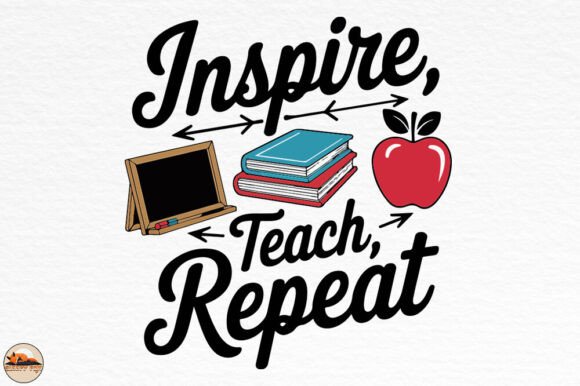
Inspire Teach Repeat: A Comprehensive Guide to the Typography Design and Its Practical Applications
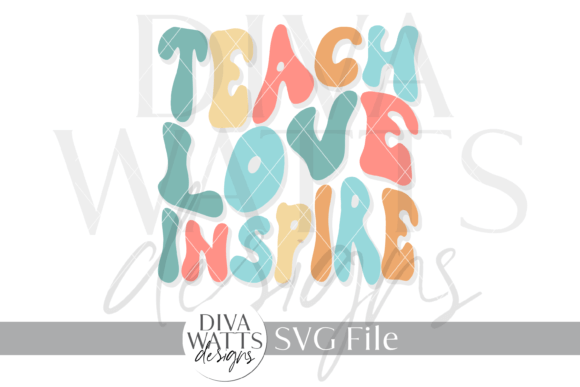
The educational sector has long relied on visual cues to communicate values, build community, and express professional identity. Among the myriad of phrases that have emerged in recent years, Inspire Teach Repeat stands out as a concise yet powerful mantra for educators. It encapsulates the cyclical nature of teaching: the inspiration drawn from students, the act of instruction, and the repetition required to reinforce learning. However, beyond its semantic meaning, this phrase has become a staple in the world of print-on-demand (POD) merchandise and classroom decor. For adults evaluating design resources—whether they are teachers looking for appreciation gifts, entrepreneurs sourcing POD assets, or designers seeking vector templates—understanding the specific attributes of an Inspire Teach Repeat design package is essential for making an informed decision.
Defining the Core Value of the Inspire Teach Repeat Design
At its heart, the Inspire Teach Repeat concept is about versatility. Unlike complex illustrations that may date quickly or rely heavily on specific cultural trends, typography-based designs offer a timeless aesthetic. The distinct value of a high-quality Inspire Teach Repeat file set lies in its technical construction. When evaluating digital assets, the difference between a low-resolution raster image and a fully editable vector package is significant. A robust design resource typically includes multiple formats: a high-definition PNG with a transparent background, alongside scalable EPS and SVG files, and a PDF for immediate printing.
This multi-format approach addresses a common pain point in the industry: the inability to adapt a single design across various mediums. A standard JPEG might suffice for a social media post, but it often lacks the resolution required for large-format printing or the flexibility needed for sublimation. The inclusion of 100% vector shapes ensures that the design can be resized without losing clarity, a critical factor when moving from a small sticker application to a large hoodie print. For professionals who need to maintain brand consistency or ensure professional-grade output, the revisability of these files is a primary differentiator.
Comparing Vector Formats Against Raster Alternatives
When researching design resources, one of the most critical comparisons involves file types. Many free or budget-friendly options available online provide only PNG or JPG files. While these are easy to use for quick digital overlays, they present significant limitations for physical production. Raster images are resolution-dependent; scaling them up results in pixelation, which is unacceptable for commercial printing standards like 300 dpi.
In contrast, a comprehensive Inspire Teach Repeat package that includes EPS 10 and SVG formats offers distinct advantages. These vector formats define the design using mathematical equations rather than pixels. This means the text and graphic elements remain crisp at any size, from a tiny phone case emblem to a massive classroom banner. Furthermore, vector files allow for deep customization. Users can easily modify colors to match school branding, adjust font weights, or even alter the layout entirely using standard design software like Adobe Illustrator, CorelDRAW, or Inkscape.
For those comparing options, the trade-off is often between convenience and control. Pre-made raster images require no editing skills but offer zero flexibility. Vector packages require a basic understanding of design tools but unlock the ability to create truly unique products. If your goal is to sell custom merchandise where color variations are key, or if you need to integrate the design into a larger branded suite, the vector capability of an Inspire Teach Repeat asset becomes a non-negotiable feature.
Evaluating Use Cases: From Classroom Decor to Commercial Merchandise
The utility of the Inspire Teach Repeat design extends far beyond simple t-shirt printing. Its clean typographic style makes it suitable for a wide array of applications, each with specific technical requirements. Understanding these use cases helps determine whether this specific design package fits your needs.
- Apparel and Textiles: For t-shirts, hoodies, and tote bags, the design must withstand washing and wear. High-resolution PNGs are often used for direct-to-garment (DTG) printing, while vector files are preferred for screen printing setups. The ability to change colors allows educators to align the shirt with their school's palette.
- Drinkware and Sublimation: Mugs and water bottles frequently utilize sublimation printing. This process requires full-bleed, high-resolution images. The 4500×5400 pixel dimensions provided in premium packages ensure that the wrap-around print remains sharp and vibrant.
- Stationery and Paper Goods: Invitations, posters, and notebooks benefit from the PDF format included in these packages. This ensures that the typography renders correctly on paper, maintaining the intended spacing and kerning.
- Digital and Small-Scale Items: Phone covers and stickers require precise cut lines and transparency. The SVG and PNG files facilitate this, allowing for clean edges and seamless integration onto smaller surfaces.
However, it is important to recognize situations where this specific design might not be the best fit. If a project requires a highly detailed illustration or a photographic element, a typography-focused design like Inspire Teach Repeat may feel too minimal. Additionally, if the user lacks access to vector editing software, the advanced features of the EPS and SVG files may go unused, rendering the purchase less valuable compared to a ready-to-use raster template.
Decision Factors: Customization vs. Convenience
Choosing the right design resource involves balancing the desire for customization against the need for speed. The Inspire Teach Repeat package represents a middle ground that leans heavily toward flexibility. It is ideal for users who view the base design as a starting point rather than a final product. For example, a teacher creating a "Teacher Appreciation Week" gift basket might want to add the recipient's name or a specific grade level to the design. With editable vector layers, this modification is straightforward.
Conversely, if the priority is immediate gratification with no design work involved, a pre-printed physical item might be more efficient than downloading and processing digital files. Similarly, individuals who do not own software capable of opening EPS or SVG files will find themselves unable to leverage the full potential of the package. In such cases, the high-resolution PNG serves as a fallback, though it limits future scalability.
Another consideration is the target audience. The phrase "Inspire Teach Repeat" resonates deeply with educators, making it a strong choice for niche markets. However, for broader audiences outside the education sector, the appeal may be limited. When evaluating alternatives, one should consider whether the message aligns with the intended demographic. While other motivational quotes exist, this specific phrasing has established a strong identity within the teaching community, offering a recognized symbol of dedication.
Technical Specifications and Print Readiness
From a technical standpoint, the quality of the source files dictates the final output. A professional-grade Inspire Teach Repeat asset should meet industry standards for print readiness. The inclusion of a 300 dpi PNG file is crucial for ensuring that digital prints do not appear blurry or jagged. This resolution is the standard for high-quality offset and digital printing, ensuring that fine details in the typography remain legible even at close range.
Furthermore, the provision of multiple file formats mitigates compatibility issues. Different printers and manufacturing services prefer different file types. Some POD platforms accept only PNGs, while others require vectors for laser cutting or embroidery digitizing. Having all formats in one package eliminates the need to convert files manually, a process that can sometimes introduce errors or degrade quality. The presence of a PDF file also ensures that the design can be shared with third-party printers who may not have vector editing capabilities but can still interpret the document accurately.
Conclusion: Making an Informed Choice
The Inspire Teach Repeat design package offers a robust solution for those seeking versatile, high-quality typography assets. Its strength lies in its adaptability, supported by a comprehensive suite of file formats that cater to both digital and physical production needs. While it may require a basic level of technical proficiency to fully exploit the vector capabilities, the resulting flexibility justifies the investment for serious creators and educators alike.
Ultimately, the decision to use this resource depends on specific project goals. For those requiring a static, one-time-use image, simpler alternatives may suffice. However, for anyone planning a series of products, needing brand alignment through color changes, or aiming for professional print quality across various mediums, the Inspire Teach Repeat vector package provides a superior foundation. By understanding the trade-offs between file types and use cases, users can confidently select the resources that best support their creative and practical objectives.