Modern Electronic Teaching: Kids and Teachers in the Digital Classroom
The landscape of education has shifted beneath our feet, moving from the static chalkboard to the dynamic glow of the screen. This transformation is best encapsulated by the concept of Modern Electronic Teaching: Kids and Tea, a phrase that captures the evolving relationship between students and educators in an increasingly digital world. While the "Tea" in this context often refers to the teacher, it also symbolizes the fluid exchange of knowledge, much like pouring tea into a cup—a process that is now mediated by tablets, laptops, and interactive software. In today's classrooms, boys and girls study subjects with computers, engaging with content in ways that were unimaginable just two decades ago.
This shift is not merely about replacing paper with pixels; it represents a fundamental reimagining of how learning happens. The image of a child hunched over a textbook is being replaced by one where students collaborate on shared digital whiteboards or explore 3D models of historical artifacts on their devices. For parents, business owners, and professionals observing these changes, understanding the mechanics and implications of this new educational paradigm is crucial. It influences workforce readiness, creative practices, and the very definition of literacy in the 21st century.
The Evolution of the Digital Learning Environment
The journey toward modern electronic teaching was neither sudden nor uniform. It began with the introduction of computer labs as separate entities within schools, places where technology was treated as a special subject rather than a tool for all subjects. Over time, as hardware became more affordable and internet connectivity more ubiquitous, the classroom itself transformed. Today, the integration of technology is seamless. Children use modern devices in the classroom as naturally as they once used pencils and erasers.
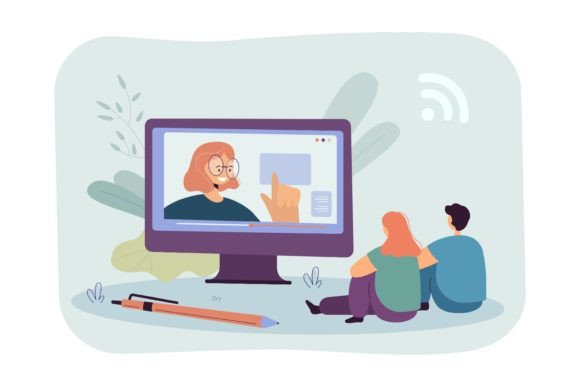
We are seeing a transition from passive consumption to active creation. In the past, a student might watch a video lecture. Now, that same student might edit the video, code a simulation related to the topic, or create a podcast explaining the concept to peers. This evolution reflects broader societal trends where digital fluency is no longer a niche skill but a baseline requirement. The vector flat concept illustrations often used to depict this scene—showing kids and teachers using modern devices—are more than just stock images; they represent a simplified yet accurate visualization of a complex ecosystem where human interaction and digital tools coexist.
From Static Lessons to Interactive Experiences
The core difference lies in interactivity. Traditional teaching often relied on a one-way transmission of information. Modern electronic teaching flips this model. When children lesson with tablets and laptops, the device becomes a portal for inquiry. A biology lesson is no longer limited to a diagram in a book; it can be an augmented reality experience where students manipulate virtual cells. A history lesson can involve accessing primary source documents from archives around the world instantly.
This shift demands a change in the role of the educator. The teacher is no longer the sole repository of knowledge but a facilitator who guides students through vast amounts of information. They help learners filter, analyze, and synthesize data. This collaborative dynamic is central to the Modern Electronic Teaching: Kids and Tea philosophy, emphasizing that technology serves to enhance, not replace, the human connection essential for effective learning.
Adapting Workflows and Educational Strategies
For educators and administrators, integrating these technologies requires a deliberate shift in workflow. It is not enough to simply distribute devices; the pedagogy must evolve to match the capabilities of the tools. Schools are increasingly adopting blended learning models, where face-to-face instruction is combined with online activities. This approach allows for personalized pacing, ensuring that students who grasp concepts quickly can move ahead while those who need more time receive targeted support.
The practical implications for the classroom are profound. Lesson planning now involves curating digital resources, setting up collaborative platforms, and troubleshooting technical issues alongside delivering content. Teachers must be comfortable navigating various software ecosystems, from learning management systems (LMS) to creative suites. This professional development aspect is critical. Just as businesses invest in training employees on new software, educational institutions must invest in upskilling their staff to leverage the full potential of modern devices.
Bridging the Gap Between Subjects and Technology
One of the most significant advantages of this approach is the ability to cross-pollinate subjects. In a traditional setting, math and art might be taught in isolation. In a digitally integrated environment, a project might require students to use geometry principles to design a 3D printed object or apply statistical analysis to interpret social media trends. Boys and girls studying subjects with computers find that the boundaries between disciplines blur, fostering a more holistic understanding of the world.
This interdisciplinary approach mirrors the realities of the modern workplace. Professionals rarely work in silos; they solve problems that require a blend of technical skills, creative thinking, and communication. By exposing students to this mode of working early on, modern electronic teaching prepares them for careers that do not yet exist. It cultivates adaptability, a trait that is highly valued in a rapidly changing economy.
Addressing Challenges and Ensuring Equity
While the benefits are clear, the transition to a fully digital classroom is not without its challenges. The most pressing issue remains the digital divide. Not all students have equal access to high-speed internet or the latest devices at home. If modern electronic teaching relies heavily on out-of-class digital work, it risks exacerbating existing inequalities. Schools must ensure that device distribution is equitable and that support systems are in place for families who lack technical expertise.
Furthermore, there is the question of screen time and its impact on attention spans and physical health. Critics argue that excessive reliance on screens can lead to sedentary lifestyles and reduced face-to-face social interaction. However, proponents argue that when used correctly, technology can actually foster collaboration. Group projects conducted on shared digital platforms require constant communication and negotiation, skills that are vital for future success.
The key lies in balance. Effective implementation of Modern Electronic Teaching: Kids and Tea involves a thoughtful curation of digital and analog experiences. It means knowing when to put the tablet down and engage in hands-on activities, outdoor exploration, or direct conversation. The goal is not to live inside the screen but to use it as a powerful lens through which to view the world.
Practical Implications for Parents and Professionals
For parents and guardians, understanding this shift is essential for supporting their children's education. It is no longer sufficient to ask, "Did you finish your homework?" The question has become, "How did you use technology to complete your assignment?" Parents need to familiarize themselves with the tools their children are using, from coding apps to research databases. This engagement helps bridge the gap between school and home, creating a consistent learning environment.
For business leaders and entrepreneurs, the rise of electronically literate students signals a change in the future talent pool. Companies will soon hire graduates who are native to digital environments, comfortable with remote collaboration tools, and adept at self-directed learning. Organizations that recognize this shift can better tailor their recruitment strategies and internal training programs. The skills developed in these modern classrooms—digital literacy, critical thinking, and adaptability—are directly transferable to the corporate world.
Future-Proofing Education
Looking ahead, the trajectory of electronic teaching points toward even greater personalization and immersion. Artificial intelligence and machine learning are poised to play larger roles, offering adaptive learning paths that adjust in real-time to a student's performance. Virtual reality could transport students to ancient civilizations or deep into the human body, providing experiential learning opportunities that were previously impossible.
However, regardless of how advanced the technology becomes, the human element remains paramount. The essence of Modern Electronic Teaching: Kids and Tea is the partnership between the learner and the guide. Technology is the vessel, but the teacher provides the direction, empathy, and encouragement. As we continue to integrate devices into the fabric of education, we must remember that the ultimate goal is not to produce efficient users of technology, but to cultivate curious, critical, and compassionate thinkers.
The visual representation of this era—often captured in vector flat concepts showing kids and teachers using modern devices—serves as a reminder of where we are. But the story is still being written. Every day, in classrooms around the world, boys and girls are discovering new ways to learn, and teachers are finding innovative ways to inspire. This is the new education, dynamic and ever-evolving, shaping the minds that will build the future.