Psychology Mental Health PowerPoint: A Comprehensive Guide for Professionals and Students
In the fields of psychology, therapy, and healthcare, the ability to communicate complex concepts clearly is paramount. Whether you are a PhD candidate defending a dissertation, a therapist presenting a case study to colleagues, or a university student explaining a theoretical framework, your visual aids play a critical role in how your message is received. This is where a specialized Psychology Mental Health PowerPoint becomes an essential tool. Unlike generic templates, these resources are designed with the specific nuances of mental health, academic research, and clinical practice in mind, ensuring that your presentation supports your content rather than distracting from it.
Understanding the Role of Visuals in Mental Health Communication
The intersection of psychology and technology requires a delicate balance. When discussing sensitive topics such as anxiety, depression, self-care, or disease, the tone of your presentation must be empathetic, professional, and trustworthy. A standard corporate template often feels too rigid or cold for these subjects, while overly artistic designs can undermine the scientific rigor required for academic defense or medical research.
A dedicated Psychology Mental Health PowerPoint Template bridges this gap. It provides a structured environment where data, literature reviews, and qualitative findings can be presented with clarity. These templates are built to accommodate the diverse needs of the field, ranging from the statistical analysis of quantitative research to the narrative flow of a therapeutic intervention plan. By using a design that aligns with the subject matter, you reduce cognitive load for your audience, allowing them to focus on the insights you are sharing rather than deciphering a confusing layout.
Addressing Common Challenges in Academic and Clinical Presentations
Professionals and students in the mental health sector often face specific challenges when preparing presentations. One of the most common hurdles is organizing vast amounts of information. A typical research project involves a hypothesis, methodology, theoretical framework, objectives, results, and conclusions. Fitting all these elements into a coherent narrative without overwhelming the audience is difficult.
Furthermore, there is the challenge of maintaining a consistent aesthetic that reflects both professionalism and care. In healthcare and charity sectors, the visual identity must convey compassion. For academic settings like colleges and universities, the design must signal scholarly rigor. Many presenters struggle to find a single resource that satisfies both requirements. They often waste hours customizing basic slides, only to end up with a disjointed look that lacks the polish needed for a high-stakes defense or a client pitch.
Another significant issue is the technical barrier. Not every psychologist or researcher is a graphic designer. Creating custom charts, resizing graphics, and formatting text placeholders can be time-consuming and frustrating. This is particularly true when working under tight deadlines for graduation, thesis submissions, or conference presentations. The need for a solution that is both visually elegant and technically accessible is a primary driver for seeking out specialized templates.
How a Psychology Mental Health PowerPoint Solves These Problems
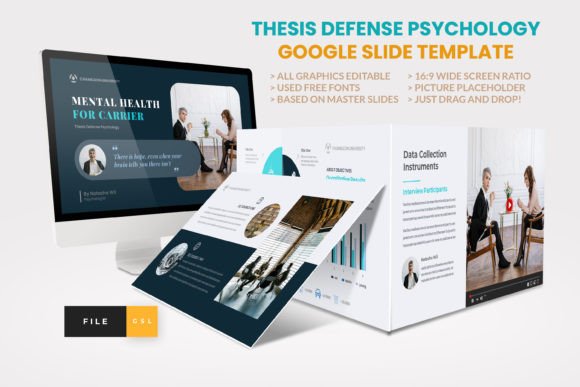
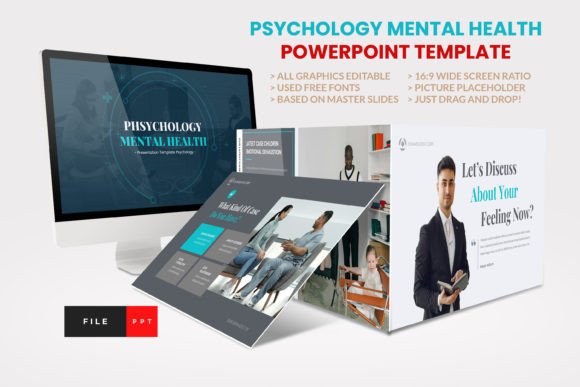
Implementing a robust Psychology Mental Health PowerPoint directly addresses these pain points by offering a pre-engineered structure tailored to the workflow of researchers and clinicians. With features like 36 distinct slide layouts, the template covers every stage of a presentation. From the initial title slide to the final conclusion, each layout serves a specific purpose, ensuring that your transition between sections—such as moving from a literary review to a discussion of results—is seamless.
The design philosophy behind these templates is rooted in modern minimalism. This approach strips away unnecessary clutter, focusing on clean lines, ample white space, and strategic use of color. This "less is more" aesthetic is particularly effective for mental health topics, as it creates a calming visual environment. The inclusion of editable graphics allows users to customize icons representing the mind, therapy, or healthcare without needing advanced design skills. You can simply drag and drop images into designated placeholders, ensuring that your visuals remain crisp and aligned regardless of their size.
Moreover, the technical specifications of these templates are optimized for today's presentation standards. Based on master slides, they ensure consistency across the entire deck. If you change a font or a color scheme on the master slide, it updates automatically throughout the presentation. The 16:9 wide-screen ratio ensures compatibility with modern projectors and screens, providing a cinematic and engaging viewing experience. Additionally, the use of recommended free web fonts guarantees that your typography looks professional on any device, eliminating the risk of font substitution errors during a live presentation.
Practical Applications Across Different Sectors
The versatility of a Psychology Mental Health PowerPoint Template makes it suitable for a wide array of users and scenarios. For academic students, whether at the undergraduate, graduate, or PhD level, these slides provide the necessary structure for thesis defenses and dissertations. They include specific layouts for presenting hypotheses, methodologies, and data analysis, which are crucial for passing rigorous academic scrutiny.
In the clinical and therapeutic realm, these templates are invaluable for case studies and team meetings. Therapists can use them to illustrate patient progress, explain treatment plans involving anxiety or depression management, or present findings from qualitative research. The ability to incorporate pictures and charts easily allows for a holistic view of patient care, blending hard data with human stories.
For organizations in the healthcare, charity, and education sectors, the template offers a professional way to communicate mission statements, awareness campaigns, and training modules. Agencies can utilize the corporate-style layouts to present service offerings or annual reports, maintaining a brand image that is both authoritative and approachable. The creative presentation capabilities also allow for unique storytelling, making dry statistics about mental health trends more engaging and impactful for stakeholders.
Tailoring Your Approach: Recommendations for Success
While the template provides a strong foundation, successful implementation depends on how you adapt it to your specific needs. Here are some practical recommendations for maximizing the utility of your Psychology Mental Health PowerPoint:
- Customize for Audience Sensitivity: When presenting on sensitive topics like disease or trauma, adjust the color palette to be softer and more soothing. Avoid jarring contrasts that might induce stress in the audience.
- Leverage Data Visualization: Use the included chart layouts to simplify complex quantitative data. Ensure that graphs are large enough to be read from the back of the room but not so large that they dominate the slide.
- Maintain Narrative Flow: Use the various slide types to tell a story. Start with the problem (literature review), move to your investigation (methodology), show the evidence (results), and conclude with the implications (conclusion).
- Utilize Documentation: Take advantage of the included documentation file. It serves as a guide for editing, helping you understand how to modify master slides and replace images efficiently.
Different users will approach the template differently based on their goals. A teacher might focus on the educational value of the slides for classroom instruction, using them to break down complex psychological theories for students. A researcher might prioritize the data-heavy slides to showcase their findings. A charity worker might emphasize the imagery and emotional appeal to raise awareness. Regardless of the user, the underlying goal remains the same: to communicate effectively and inspire action or understanding.
Conclusion: Elevating Your Mental Health Discourse
In a world where attention spans are short and information density is high, the quality of your presentation can make or break your message. A well-designed Psychology Mental Health PowerPoint is more than just a collection of slides; it is a strategic asset that enhances credibility, clarity, and engagement. By choosing a template that respects the gravity of mental health topics while embracing modern design principles, you empower yourself to share your knowledge with confidence.
Whether you are defending a PhD, leading a therapy workshop, or advocating for mental health awareness, the right tools matter. With its comprehensive set of 36 slides, editable graphics, and professional layout, this template offers a solution that balances academic rigor with creative expression. It removes the technical barriers of design, allowing you to focus on what truly matters: the content of your work and the impact it has on the lives of others. Embrace the power of effective visual communication to advance the field of psychology and improve outcomes for those seeking help.